You’ve built something real. Multiple channels, growing order volume, and customers who expect a seamless experience whether they’re buying online or walking into a store. But somewhere between the ambition and the execution, the cracks start showing.
Sound familiar?
- Inventory that lies. Stock is scattered across warehouses, stores, and suppliers with no single source of truth on what’s actually available to promise.
- Channels showing different numbers. None of them are current. All of them pose risks to customers and downstream operations.
- BOPIS and ship-from-store are stuck in limbo. The ambition is there. The integrations never quite get there.
- Margin leaking quietly. Split shipments, manual workarounds, and routing decisions made by gut instinct rather than data.
You’ve outgrown the tools that got you started — but enterprise systems feel like they were built for a company three times your size. The right order management system closes that gap.
What we evaluated — and what we excluded
This guide covers five OMS platforms selected specifically for mid-market operators who’ve outgrown their starter tools but have no interest in an enterprise commitment. Each platform here was assessed on the OMS capabilities that matter: unified real-time inventory, automatic routing logic, integrations that hold at peak, omnichannel features that configure rather than require custom development, and the ability to evolve your operation without a change order every time.
The 5 best OMS platforms for 2024
1. Deposco — the unified, scalable leader
Deposco occupies a category of its own among Manhattan alternatives: genuine OMS and WMS unification on a single codebase. Bright Order and Bright Warehouse are not two integrated products — they are the same platform, sharing one database. No middleware translating between them. No sync delay. No integration layer to maintain, troubleshoot, or watch fail during peak season.
That architectural decision for this type of order management software has downstream benefits for everything your operation depends on.
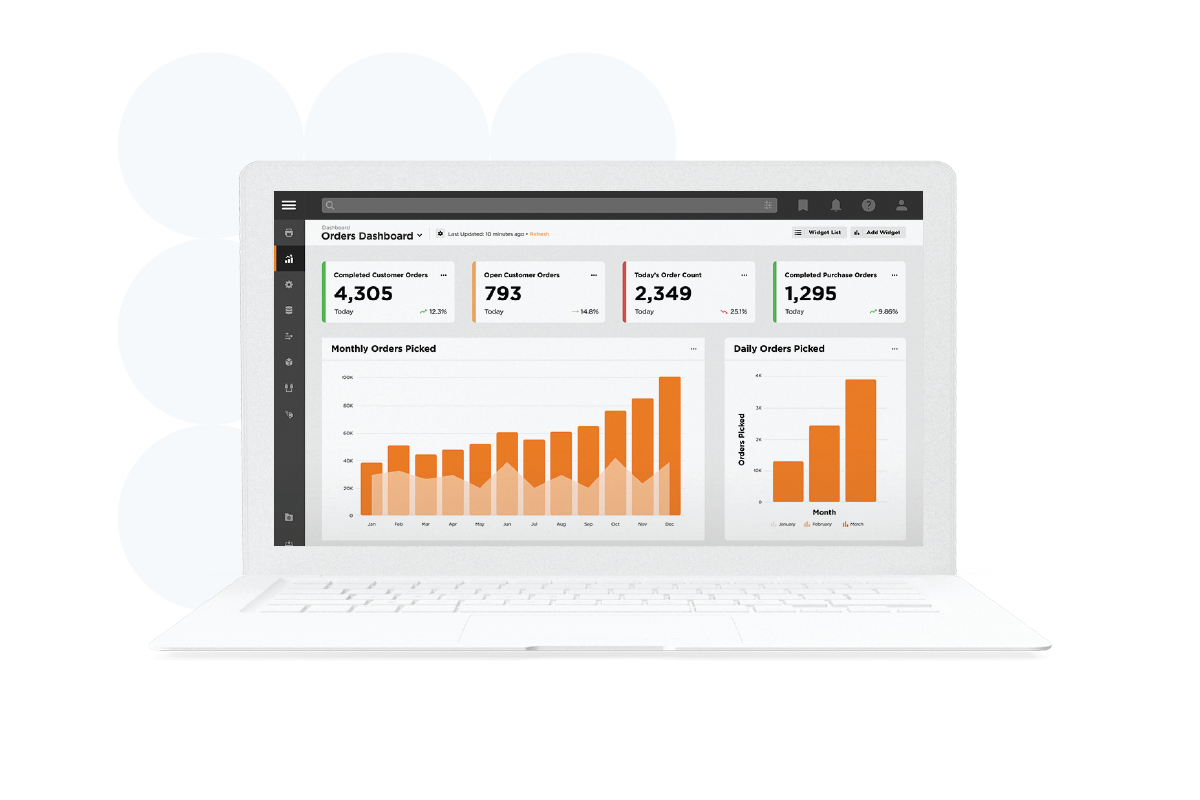
Key Feature #1: One unified platform for OMS and WMS. Most OMS platforms make inventory promises based on data that was accurate minutes or hours ago. Because Deposco’s OMS and WMS systems share infrastructure, fulfillment promises are grounded in real-time warehouse data. When a unit ships, every channel knows immediately. When a return hits the dock, it’s available to promise before the box is unpacked. The operational capabilities other vendors position as complex integrations — ship-from-store, BOPIS, curbside — are already built in and activated in weeks, not quarters.
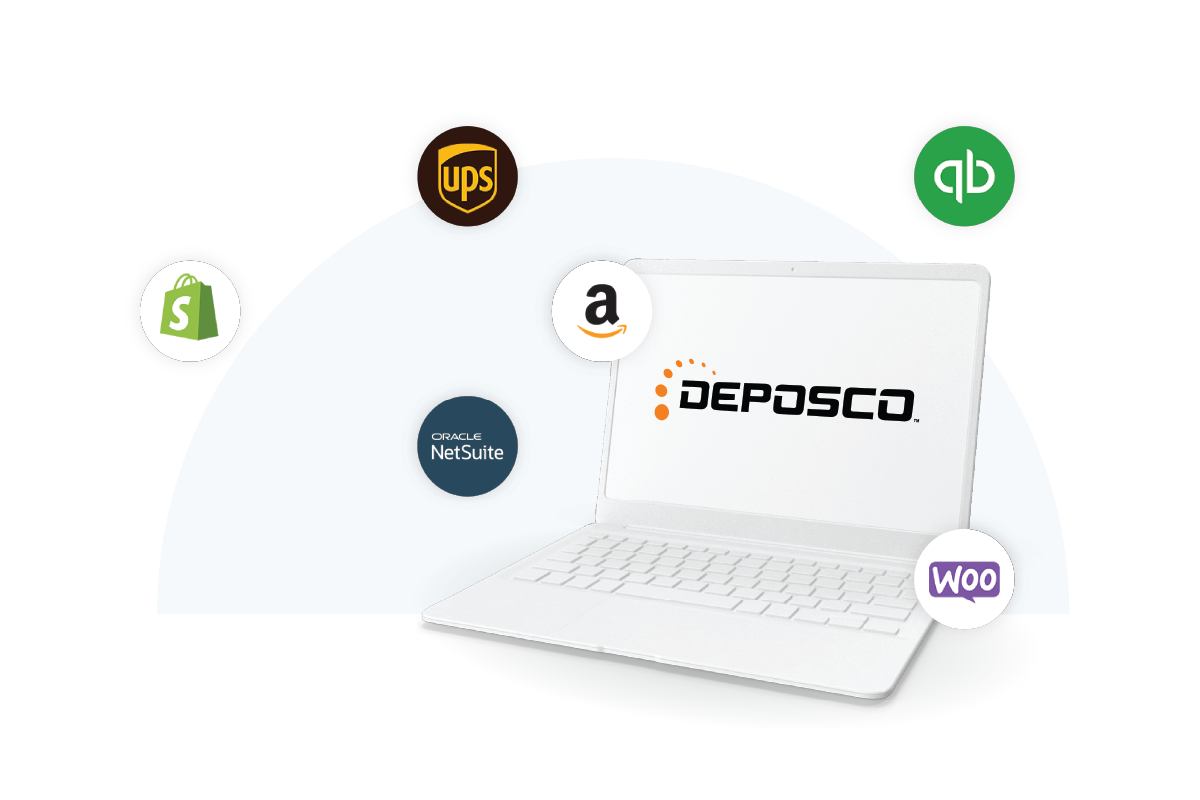
Key Feature #2: 150+ vendor-owned integrations. Deposco builds and maintains its own connectors to Shopify, Amazon, Walmart, NetSuite, major carriers, and 140+ other platforms. When something breaks at peak — and with third-party middleware, something always does — vendor-owned integrations get fixed faster. No finger-pointing between vendors while orders pile up.
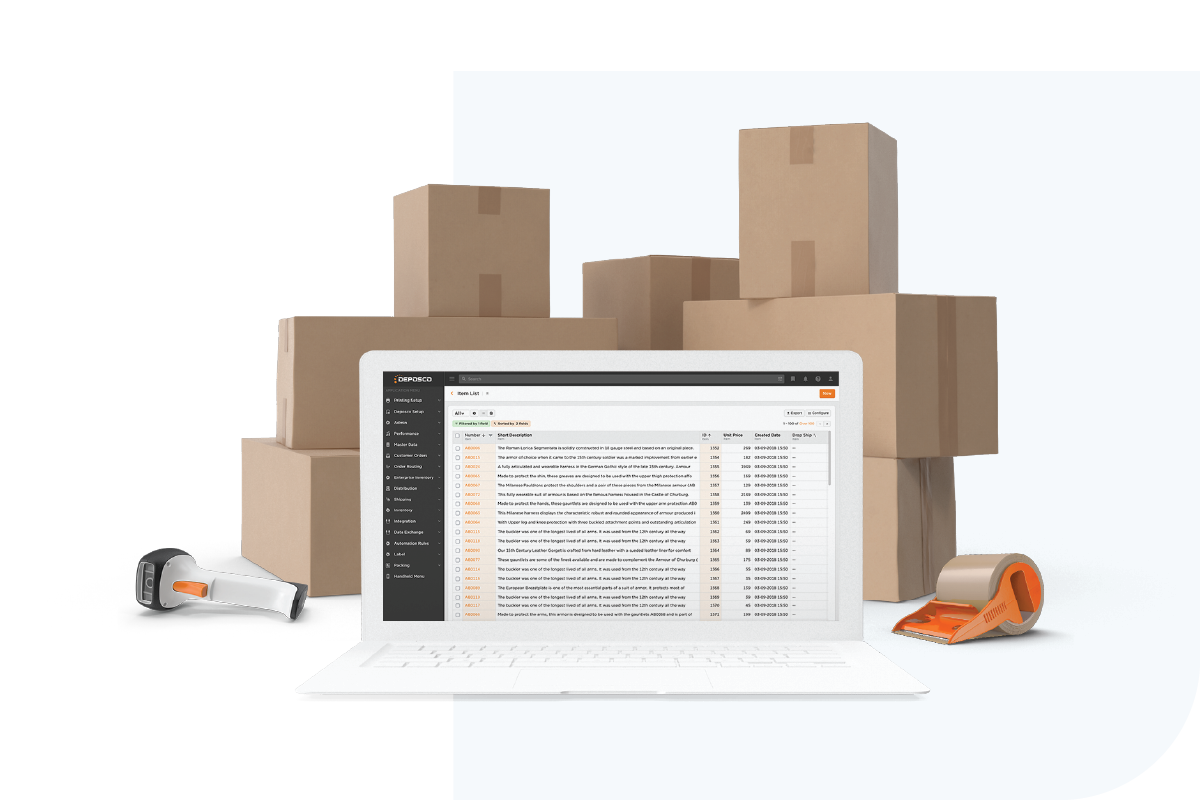
Key Feature #3: AI-driven network intelligence at scale. Deposco’s cloud-native architecture draws on routing intelligence from 97 million consumer orders annually. That operational learning sharpens fulfillment decisions across proximity, cost, speed, and capacity in ways a brand building its own routing logic from scratch simply can’t replicate.
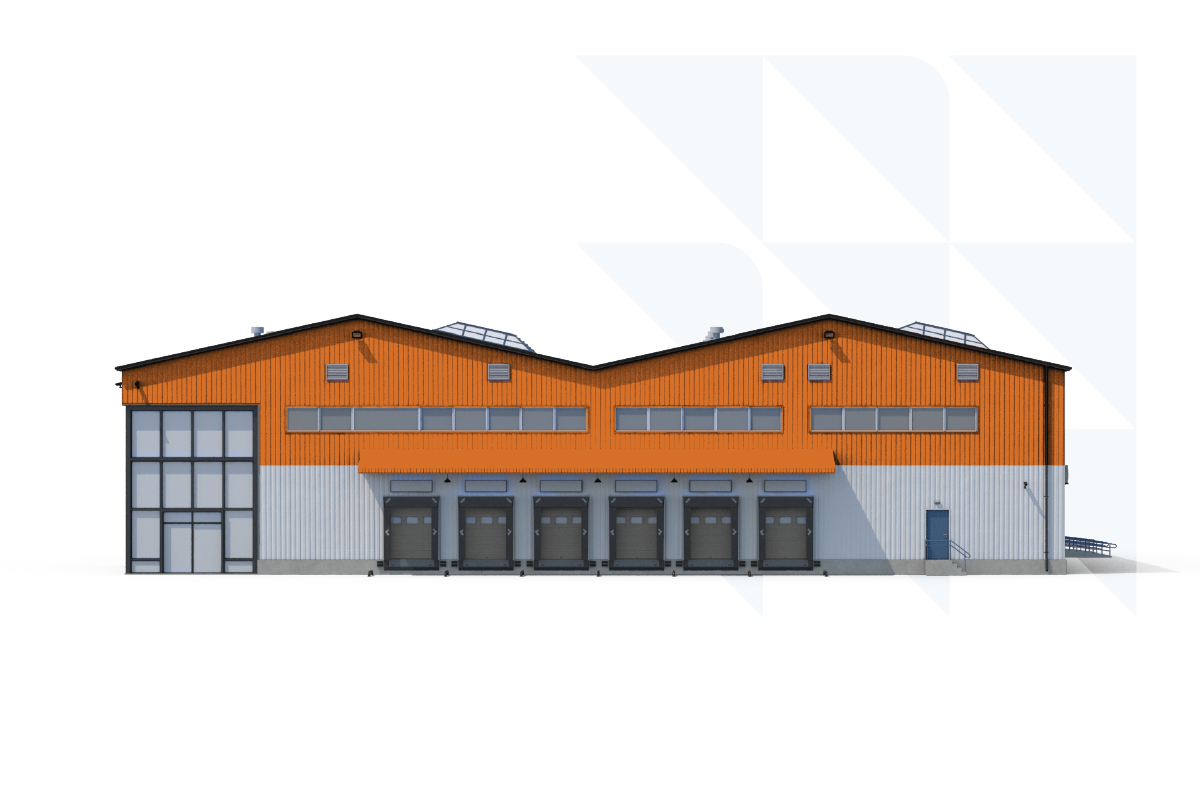
Key Feature #4: Omnichannel and B2B in the same platform. Most platforms optimize for one motion — DTC or wholesale — and bolt on the other. Deposco handles significant B2B complexity alongside DTC without treating either as secondary. EDI, wholesale routing, and retail replenishment live in the same system as your Shopify and Amazon flows.
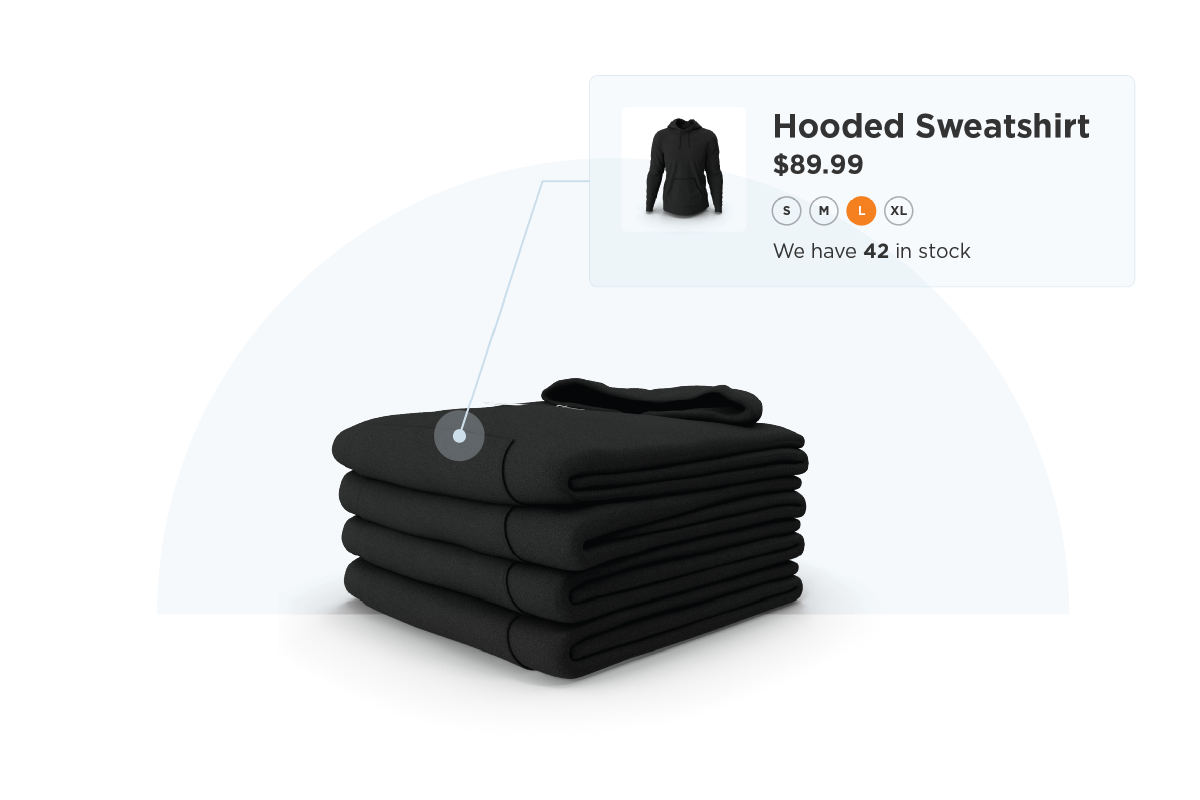
Key Feature #5: Flexibility and cost predictability — without the enterprise trade-off. This is where Deposco most directly answers what enterprise OMS customers come to us saying they’ve lost. Configuring a new channel, adding a fulfillment node, or connecting a new carrier doesn’t require a consulting engagement. It’s the kind of change your team can execute, on your timeline, at a cost you can actually predict. No surprise modules. No add-on fees for capabilities that should be standard. Enterprise-grade power with the operational agility that enterprise platforms quietly take away.
Results from Deposco’s customers
- Psycho Bunny: 90% reduction in short ships after unifying inventory across nearly 150 retail locations, with 20–30% more inventory now available-to-sell across the store network
- National Roper’s Supply: 40% decrease in labor hours per week and a record-setting peak season, with same-day order fulfillment from go-live
- Nimbl Fulfillment: Billing cycle cut from 7 days to 3, with a 64% increase in order volume in the first 3 months on the platform
- Outerspace: 12x revenue growth in the first 9 months, scaling to 1 million square feet of warehouse space across North America with 4x the monthly orders shipped
It’s worth asking about whether your current operation needs this depth yet, and how quickly that changes as channels multiply.
Best for: Growing omnichannel brands and 3PLs that need unified operations, real integrations, and a platform that stays flexible as the business evolves.
2. Zoho Inventory — the budget option
For businesses already running on Zoho’s ecosystem, the inventory module slots in without friction. The interface is clean, pricing is accessible, and the basics are handled reliably — making it a practical starting point for operations that haven’t yet hit mid-market complexity. Where it earns its place is tight native integration across the Zoho product suite and an intuitive interface with a manageable learning curve.
It’s worth asking about integration breadth with tools outside the Zoho ecosystem, scalability as order volume and channel complexity increase, and reporting depth compared to dedicated OMS platforms.
Best for: Small businesses in the Zoho ecosystem that need solid inventory fundamentals.
3. Fishbowl — the QuickBooks-integrated option
Fishbowl was built to complement QuickBooks, and that focus shows. For manufacturers and wholesalers where accounting synchronization is central to operations, Fishbowl provides inventory management that connects cleanly to the books — with seamless QuickBooks sync, manufacturing workflow support including bills of materials, and barcode scanning for warehouse operations.
Worth asking about: interface modernity compared to cloud-native platforms, on-premise versus cloud deployment fit, and integration needs outside the QuickBooks connection.
Best for: QuickBooks-dependent manufacturers and distributors prioritizing accounting alignment.
4. Acumatica — the starter ERP approach
Acumatica delivers full cloud ERP with order management as part of a broader operational suite for SMB to mid-market organizations. If your business needs financials, CRM, and operations unified in a single platform, it covers that ground. The tradeoff is scope — this is an ERP commitment, not a focused OMS deployment. Its financial management and reporting capabilities are strong, and the user-based pricing model offers flexibility for different team sizes.
Worth asking about: the learning curve associated with full ERP adoption, implementation partner requirements and timelines, and time-to-value compared to a purpose-built OMS.
Best for: Companies ready for a full ERP investment rather than standalone order management.
5. Cin7 — the SMB inventory suite
Cin7 offers a feature-rich cloud-based inventory platform for small and medium-sized businesses, covering real-time inventory tracking, basic warehouse management, integrated accounting, and demand forecasting via ForesightAI. It’s a capable option for SMBs that want multiple functions under one roof. For operations at mid-market scale or anticipating rapid growth, it’s worth evaluating how the architecture and support model holds up as complexity increases.
Worth asking about: direct support communication channels and the breadth of customization available for workflows, reporting, and integrations beyond standard configuration.
Best for: Small to medium-sized businesses wanting broad feature coverage within a single SMB-focused platform.
Why Deposco is best for mid-market omnichannel
Deposco was built for mid-market brands caught between two inadequate options: starter tools that cannot handle the complexity, and enterprise platforms that take quarters and a full IT team to deploy.
- One platform, one database — OMS and WMS share infrastructure. Inventory promises and fulfillment execution stay synchronized without a middleware layer.
- Ship-from-store, BOPIS, and endless aisle activate in weeks because there is no separate WMS integration to complete.
- Real-time inventory synced across Shopify, marketplaces, and every fulfillment node in the network.
- Enterprise-grade capabilities delivered at mid-market speed and with mid-market economics.