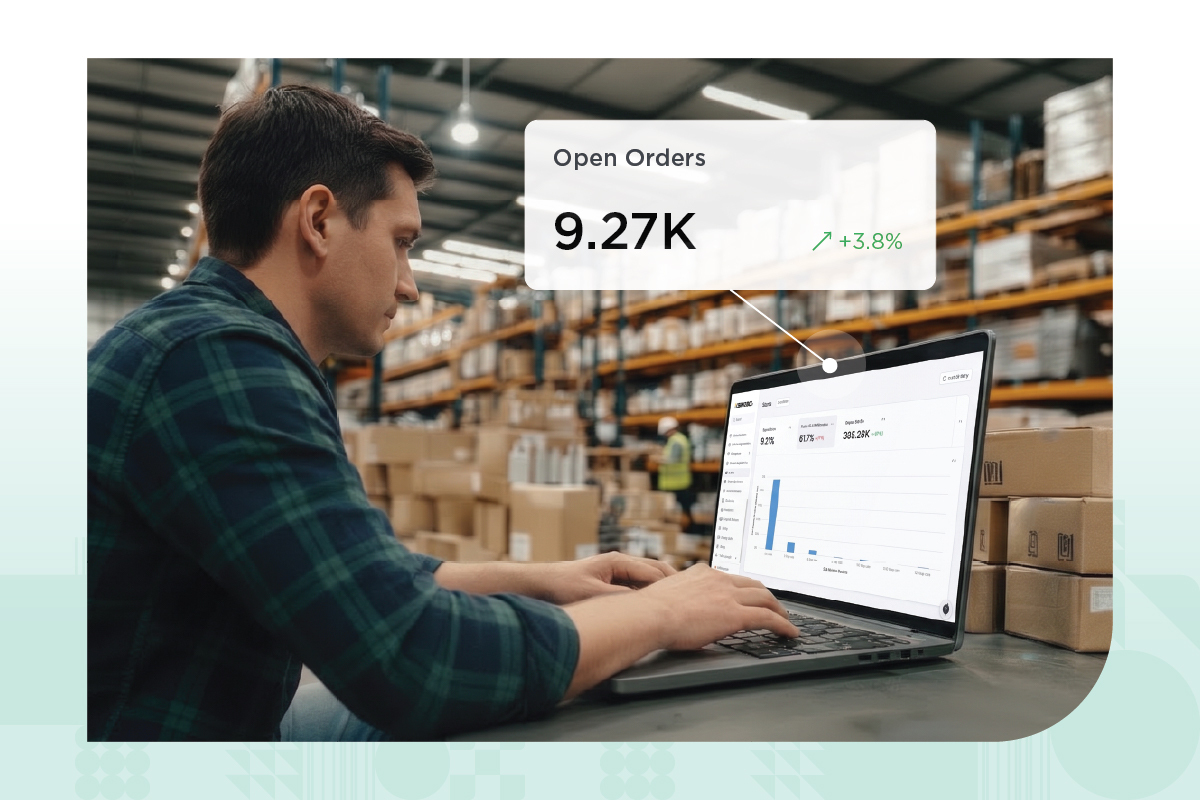
The best 3PL WMS in 2026 for a mid-market operator running multiple clients under one roof is Deposco, with Extensiv, ShipHero, Logiwa, Softeon, and Made4net fitting specific client mixes and volume profiles. The deciding factors are not feature counts. They are whether the system captures every billable activity, onboards a new client in hours rather than weeks, lets clients answer their own questions, and prices in a way that survives a seasonal headcount spike.
Why the wrong 3PL WMS costs more than the license
A 3PL sells execution it does not own the demand for. Every new client arrives with its own inbound rules, packaging specs, marketplace connections, and service levels, and every one of them expects an accurate invoice and a live answer on inventory. When the warehouse system cannot hold that complexity, the account team absorbs it, and the cost shows up as churn. Deposco’s 3PL playbook puts annual client churn in the category near 40%.
When 3PL operations leaders go looking for a WMS, they are usually dealing with four problems:
- Billing runs in spreadsheets, so value-added services go uncaptured and month-end close takes days of reconciliation.
- Client onboarding is a services project measured in weeks, which caps how fast the sales team can sign new business.
- Clients call or email for inventory and order status because the portal stops at a stock lookup, so account managers spend their day answering questions a system should answer.
- Per-user licensing and long training cycles punish the seasonal staffing that peak requires.
In this guide, we evaluated six 3PL warehouse management systems on those four problems:
- Deposco (Best for mid-market 3PLs scaling client count without proportional headcount)
- Extensiv
- ShipHero
- Logiwa
- Softeon
- Made4net
1. Deposco
Best for: mid-market 3PLs that need to add clients, volume, and automation without adding proportional headcount or renegotiating a license every peak.
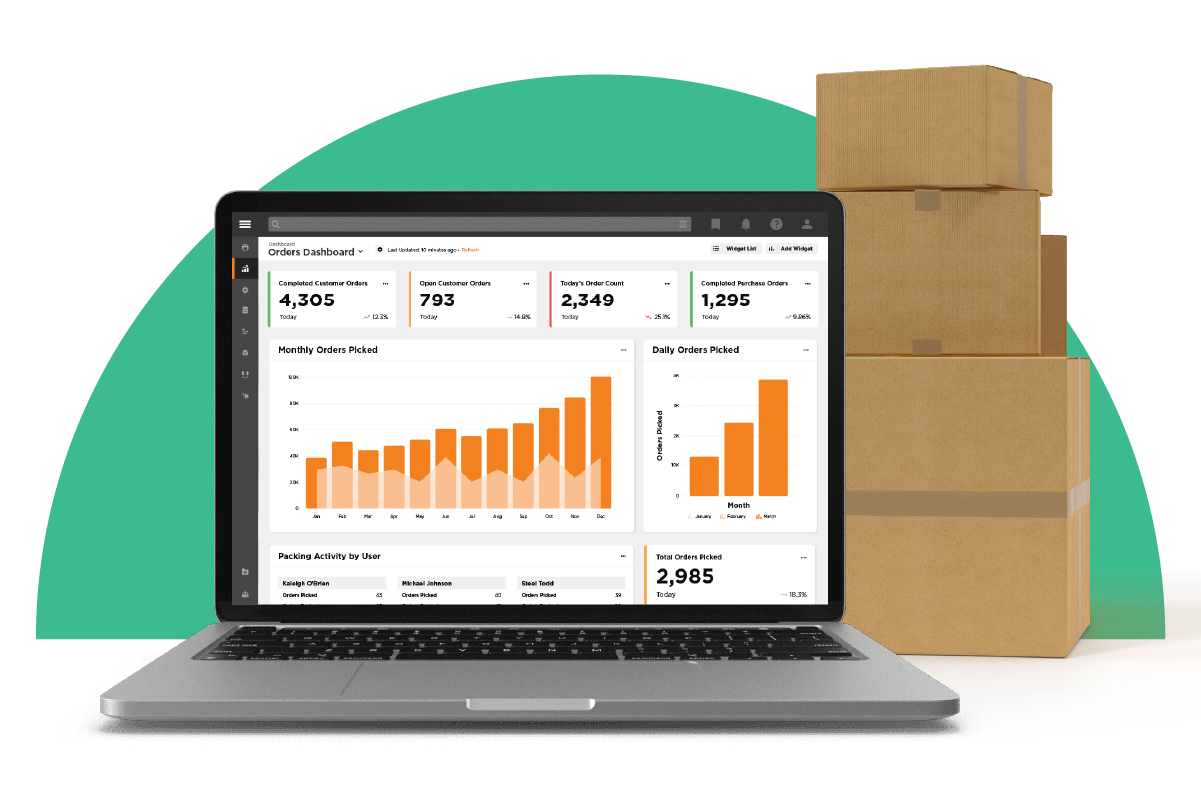
Deposco runs warehouse management, distributed order management, 3PL billing, and client portals on one cloud-native codebase, with Supply Chain Intelligence layered on top for labor, inventory, and shipping visibility. It is built for the $50M–$500M operator whose growth outpaces what a single-tenant or multi-product stack can absorb. ITB Fulfillment scaled order volume 9x in its first year on Deposco while holding 100% uptime and an error rate under 1%, without growing headcount.
Billable activity capture that closes the month faster
Gap: Most 3PL WMS platforms treat billing as an export. Storage, handling, and value-added services get reconstructed from reports at month-end, and anything the report misses is revenue the 3PL never invoices.
How: Deposco’s 3PL billing runs inside the WMS, so every receipt, pick, pack, kit, and shipment writes a billable event as it happens. Invoices assemble from the activity log, not from a spreadsheet. The result: fewer disputes, faster close, and value-added services that get paid for. Nimbl Fulfillment cut four days from its billing cycle while growing order volume 64% in its first three months.
Scenario: A controller at a 20-client 3PL used to start month-end by pulling six reports and reconciling them against a rate card in Excel. Kitting and relabeling were billed from memory. On Deposco, the invoice run pulls the activity log directly, kitting shows up as line items, and the books close before the first week of the month is out.
Client onboarding measured in hours
Gap: Onboarding a client with its own inbound rules, packaging specs, and marketplace connections usually becomes a services project. The sales team can sign faster than operations can go live.
How: Deposco templatizes client configuration, so a new account inherits proven workflows and adjusts only what differs. A library of 150+ pre-built integrations covers shopping carts, marketplaces, carriers, and ERPs. Derby Supply Chain Solutions has onboarded new clients in as little as two hours.
Scenario: A VP of Operations signs a mid-quarter DTC client that needs Shopify, Amazon Seller Central, and EDI with two big-box retailers. Instead of a six-week integration project, the client is cloned from a template, the connectors are switched on, and the first orders flow the same week the contract is signed.
Client self-service through Bright Portal
Gap: A portal that only shows stock levels still generates tickets. Clients want to see order status, SLA performance, and billing detail, and to act on what they see, without emailing an account manager and waiting.
How: Bright Portal is a white-labeled client portal that exposes inventory, orders, shipments, SLA performance, and billing in real time, under the 3PL’s own brand. And it goes past visibility into action: clients can enter orders, schedule inbound shipments, and pull their own reports and billing detail directly in the portal. The account team stops being the middle layer for both questions and routine requests.
A 3PL’s CX director tracks how many “where is my inventory” emails the team fields each week. After Bright Portal goes live, the count drops, and so do the request tickets behind it: the client’s ops lead checks receipts at 7 a.m., keys in a rush order herself, and books next week’s inbound container without anyone at the 3PL touching it. The relationship conversation shifts from status updates and data entry to growth plans.
Scale without proportional headcount
Gap: Most 3PLs buy growth with headcount: more orders means more people, and per-user licensing plus multi-day training makes every added person cost twice. The real test of a WMS is whether the team you already have can ship more through it.
How: Deposco’s system-directed picking, packing, and replenishment raise throughput per labor hour, so volume growth does not translate one-for-one into hiring. When you do add people, the subscription is site-based, so headcount spikes never trigger a license renegotiation, and the interface makes new warehouse employees productive in minutes, not shifts. Labor Intelligence shows where hours are going by client and task so supervisors can rebalance before throughput suffers. ITB Fulfillment grew order volume 9x in its first year on Deposco without growing headcount.
Scenario: A general manager’s order volume is up 40% year over year heading into peak. Instead of hiring 40% more people, directed workflows lift picks per hour across the existing crew, Labor Intelligence flags which client programs are running under plan so labor moves where it earns, and a smaller temp crew covers the true peak weeks, productive by the end of their first hour, with no license true-up.
Walk through client onboarding, billable activity capture, and Bright Portal with a 3PL systems expert. Built for the midmarket operator adding clients faster than headcount.
2. Extensiv
Extensiv markets a suite for 3PLs built from 3PL Warehouse Manager (formerly 3PL Central), Billing Manager, Network Manager, and an integration layer (formerly CartRover). It is positioned for SMB and lower mid-market logistics providers and is a frequent starting point for operators moving off spreadsheets.
- Cloud WMS with SmartScan mobile barcode scanning and SmartPack packing workflows
- Billing Manager for activity-based client invoicing
- Network Manager for multi-warehouse and 4PL visibility
- Integration marketplace covering carts, marketplaces, and carriers
3. ShipHero
ShipHero markets a cloud WMS for ecommerce brands and the 3PLs that serve them, with a mobile picking app and pre-built connections to major carts and marketplaces. Its positioning centers on DTC pick, pack, and ship speed.
- Mobile picking and packing app with pack-to-light support
- One-click integrations for Shopify, Amazon, and other DTC channels
- Brand portal for client order and inventory visibility
- Built-in shipping with carrier rate selection
4. Logiwa
Logiwa markets Logiwa IO as a cloud fulfillment management system for high-volume DTC brands and 3PLs. Its positioning emphasizes an API-first architecture, no-code workflow configuration, and AI-assisted task creation for warehouse labor.
- No-code workflow automation for client-specific rules
- Headless architecture with a documented API for every interface action
- Multi-client management with client-specific portals and billing
- Shipping automation with carrier and marketplace integrations
5. Softeon
Softeon markets a WMS paired with a warehouse execution system (WES), distributed order management, and a 3PL edition with multi-client capabilities. It positions for distribution operations that range from manual sites to automation-heavy facilities.
- WMS and WES on one platform for automation orchestration
- 3PL edition with multi-client operations and billing management
- Distributed order management and voice-directed picking
- Fixed-price implementation option, as marketed
6. Made4net
Made4net markets the SCExpert suite, a modular platform covering WMS, yard management, labor, and transportation, with a 3PL edition that includes billing and client visibility. Owned by Ingka Group (IKEA) since 2023, it offers SaaS and on-premises deployment.
- Modular WMS with yard, labor, and transportation add-ons
- 3PL billing and client portal in the 3PL edition
- SaaS, on-premises, or subscription on-premises deployment
- Fast-track implementation methodology, as marketed
How Deposco can help
All six platforms can receive, pick, and ship. The difference for a growing 3PL is how much of the complexity each new client brings gets absorbed by the system and how much lands on the team.
If you run operations: Deposco captures billable activity as it happens, onboards clients from templates, and puts new labor to work in minutes. ITB Fulfillment scaled 9x on it without growing headcount.
If you own the P&L: site-based pricing means peak labor does not trigger a license true-up, and Executive Intelligence shows profitability by client, not just by warehouse.
If you own the technology stack: one codebase for WMS, OMS, billing, and portal removes the integration seams that multi-product suites leave behind, with 150+ pre-built connectors for everything outside it.
If you own client relationships: Bright Portal turns status requests into self-service, and the SLA data clients see is the same data your team runs on.
Growth in third-party logistics is messy: clients arrive mid-quarter, peak lands on schedule whether the labor does or not, and every invoice is a retention event. Deposco has guided hundreds of operators through exactly that. Map your current constraints against the four dimensions above, then see what a system built to absorb them looks like in production.
ITB Fulfillment grew 9x in year one. Derby onboards new clients in 2 hours. Nimbl cut four days from month-end close. Schedule a live demo with a 3PL systems expert.
Evaluation Disclaimer
The evaluations, comparisons, and recommendations in this article represent opinions based on limited publicly available information, selected customer reviews, analyst reports, and industry publications as of July 2025. These assessments do not constitute comprehensive evaluations of all available WMS solutions or reflect the complete range of user experiences across different implementations.