Operations leaders who land on Rebus are typically running environments with multiple WMS platforms or legacy systems that produce fragmented data. Rebus markets an agnostic architecture that connects across WMS configurations and consolidates data into a dashboard view.
What the evaluation process often surfaces is the cost of that flexibility: an additional vendor to contract, a third-party data pipeline to maintain, and an integration layer positioned between the consolidated view and the operational systems where work actually runs. For operations standardized on a single WMS, the consolidation premise does not apply — and the overhead still does.
Operations leaders evaluating Rebus alternatives are typically dealing with one or more of these:
- They need labor performance visibility without adding another system to their stack. Consolidation platforms solve a data fragmentation problem, but they introduce a new dependency: the integration layer itself, which requires ongoing maintenance and creates a sync gap between the consolidated view and operational reality.
- They want benchmarks grounded in real external data, not a consolidated view of their own operation. Aggregating data from existing systems provides a unified picture of current performance — it does not tell you whether that performance is good or bad relative to peers running similar order types.
- Their primary system is a single WMS and they are not managing a multi-system environment. Rebus’s agnostic integration strength is most valuable in genuinely complex multi-WMS environments; for operations standardized on one platform, the consolidation value proposition is less relevant.
- They need labor cost broken out by customer program, not just by facility. Operational dashboards typically aggregate at the facility or shift level; 3PLs and multi-client operators need the cost isolation that drives billing accuracy and SLA accountability.
- They want AI that diagnoses root cause, not just a configurable dashboard. Custom widget builders and unified views surface data — they do not automatically identify which worker, which process, or which order type is driving a cost problem.
In this post, you will find six Rebus alternatives to help you choose the best labor management platform for your warehouse operation:
- Deposco Labor Intelligence — Best for mid-market brands, retailers, and 3PLs running Deposco Bright Warehouse who need enterprise-grade labor benchmarking without the implementation timeline
- EasyMetrics
- Takt.io
- Manhattan Associates (Active Labor Management)
- Blue Yonder (Luminate Labor Management)
- Logiwa IO
Methodology: We evaluated each solution on benchmarking methodology, time to initial value, financial reporting depth, individual coaching capability, integration model, and target market fit. This guide reflects publicly available product information as of August 2026.
Labor costs are not waiting for your next evaluation cycle — and neither is the data you need to manage them.
Explore Agentic Labor Intelligence
1. Deposco Labor Intelligence
BEST FOR: Mid-market brands, retailers, and 3PLs running Deposco Bright Warehouse who need enterprise-grade labor benchmarking without the implementation timeline
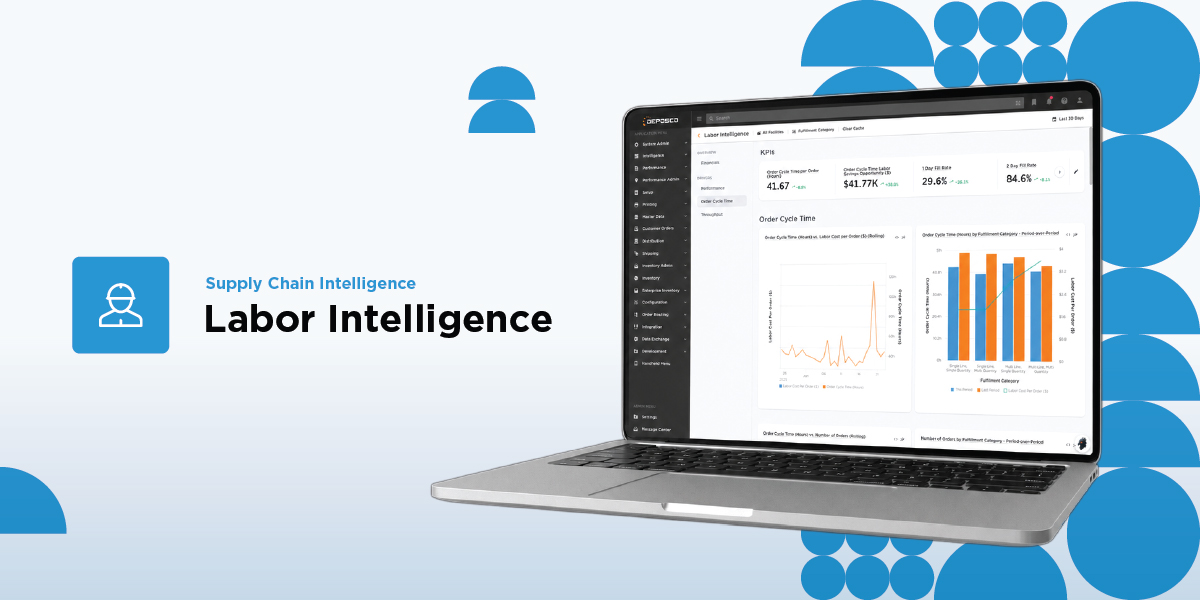
Deposco Labor Intelligence is a labor performance and financial visibility platform built natively into Deposco’s Bright Warehouse WMS. Where Rebus aggregates data from multiple systems into a unified view, Labor Intelligence eliminates the aggregation problem at the source — labor data, warehouse operations, financial reporting, and supply chain planning all share a single data layer without a consolidation layer in between.
For operations running Deposco Bright Warehouse that want the unified visibility Rebus promises, without the integration overhead of a third-party platform, Labor Intelligence is the native alternative.
Key feature #1: Unified visibility without the consolidation layer
Gap: Rebus provides a unified operational view by consolidating data from multiple systems. For operations running multiple WMS platforms or legacy systems, this is genuinely valuable. For operations standardized on a single WMS, it introduces an integration layer — and all the maintenance that comes with it — to solve a problem that native tools could address without the additional dependency.
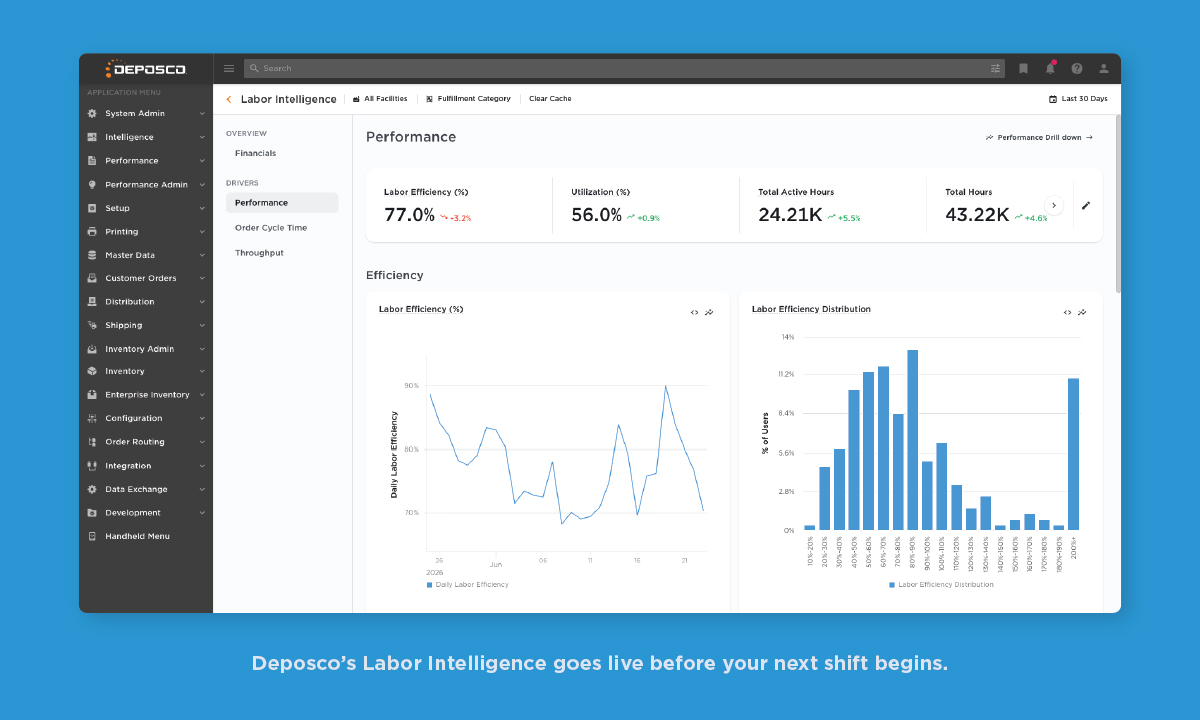
How: Labor Intelligence is native to Bright Warehouse. There is no consolidation layer, no third-party data pipeline, and no sync gap between the view and the operation. Labor data, order execution, financial reporting, and the Live Supervisor view all read from the same source of truth — updated in real time, without a system boundary in between.
Scenario: A director of operations at a $180M consumer goods brand runs a single DC on Deposco Bright Warehouse. She evaluated Rebus for labor visibility — but activating Labor Intelligence gave her the same unified view without adding an integration contract, a new vendor relationship, or a data pipeline her IT team has to own.
Key feature #2: External peer benchmarks, not just a better view of internal data
Gap: Rebus consolidates and surfaces data from existing systems. That creates a better view of what the operation is doing — but not whether what it is doing is good. If throughput has been consistently below industry norms, a unified dashboard of that throughput reflects the problem without providing an external reference point for what good looks like.
How: Labor Intelligence benchmarks are derived from 60 million-plus actual scan events across tens of thousands of warehouse workers doing the same processes, the same order types, on the same platform. The 90th percentile of batch pickers handling multi-line, multi-quantity orders across the Deposco network becomes the performance standard — broken down by process, order type, and pick method. The benchmark is external and real, not a reflection of the operation’s own history.
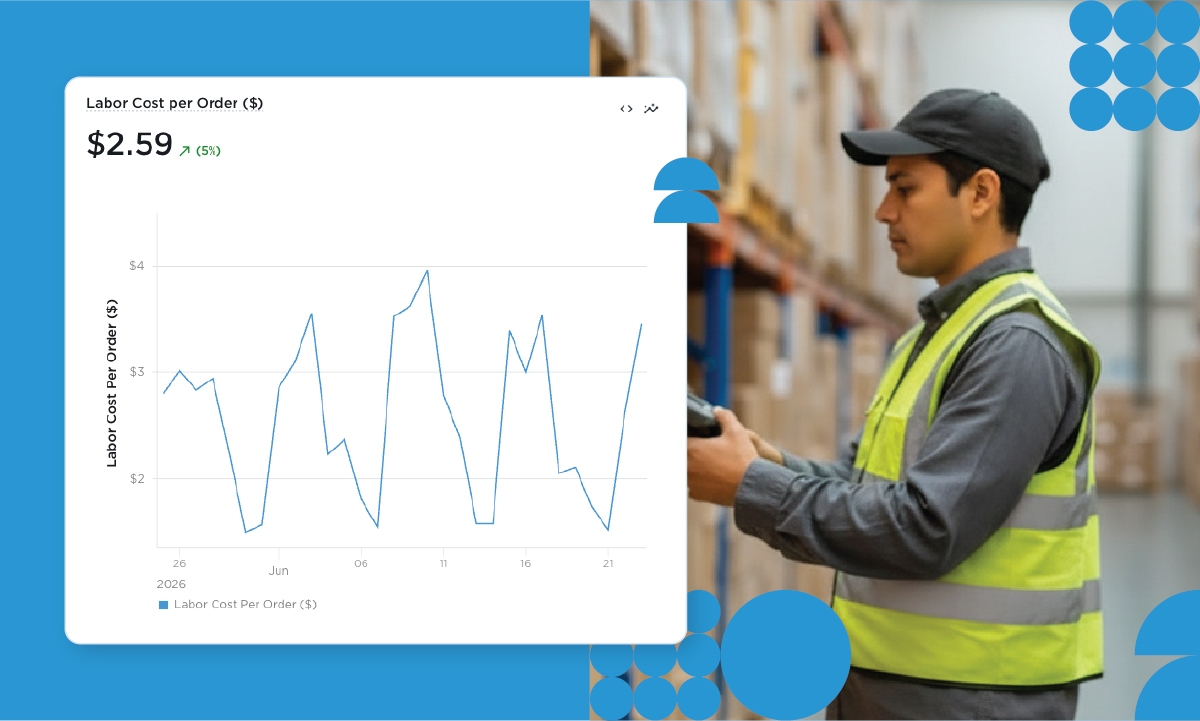
Scenario: A warehouse manager using a consolidated dashboard sees that her team’s pick rate is 142 units per hour. Without an external benchmark, she has no way to know whether that is excellent or mediocre. Labor Intelligence shows her immediately that the 90th percentile for her pick method on the Deposco network is 178 — and attaches a dollar figure to the gap.
Key feature #3: Day One deployment — no integration project before visibility is available
Gap: Rebus requires connecting to existing systems and consolidating their data streams before the unified view is operational. For complex multi-system environments, this is the core use case. For single-WMS operations, it means an integration project stands between the decision to deploy and the first insight.
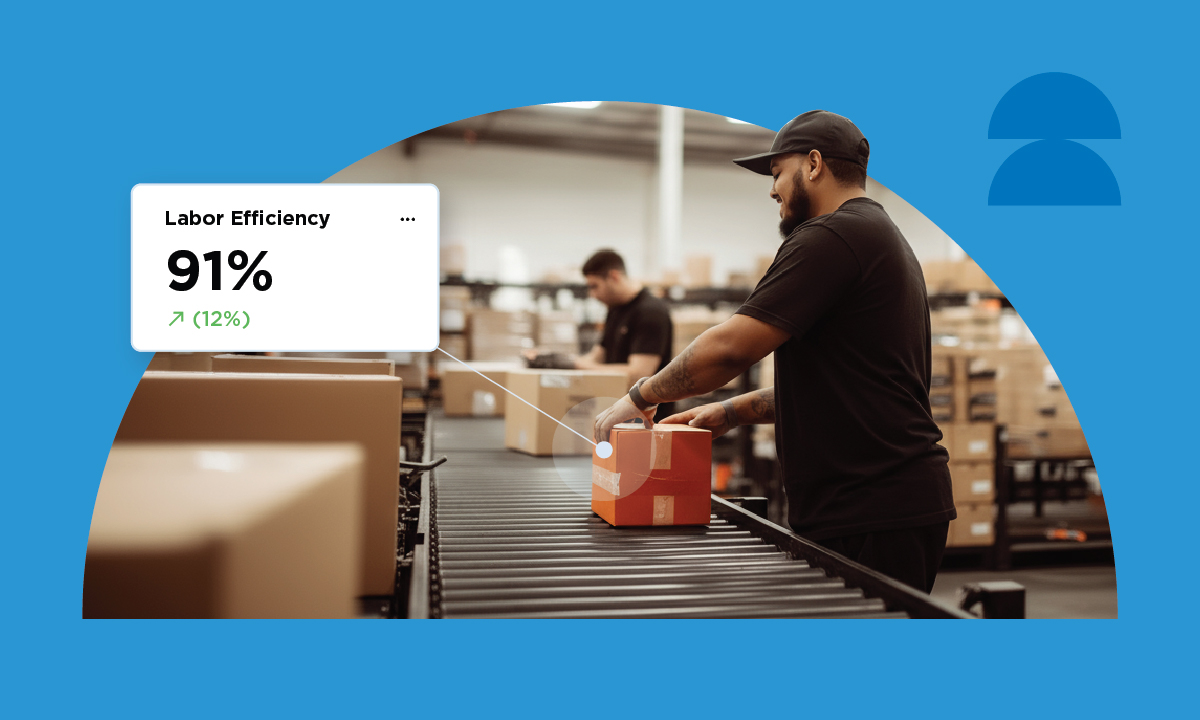
How: For operations already running Bright Warehouse, Labor Intelligence requires no integration project. Input your average hourly rate and shift hours — Labor Intelligence is live before your next shift. Benchmarks are already derived from 60 million-plus real tracked labor hours across the Deposco network. No data mapping, no connector configuration, no implementation timeline.
Scenario: A VP of Operations approves Labor Intelligence on a Monday. By Tuesday morning’s shift start, the floor supervisor has five-minute interval performance data, real-time labor cost per order, and benchmark comparisons against peer operations — with no IT project in between.
Key feature #4: Felix AI for causal root cause, not configurable dashboards
Gap: Rebus’s Custom Widget Builder lets operations teams configure their own dashboards without IT involvement — a genuine capability for teams that want to shape their own reporting. Configuring dashboards still requires someone to define the questions, build the views, and interpret the data to draw conclusions.
How: Felix — a team of AI agents — diagnoses root cause without requiring a configured view or an analyst to interpret the output. Ask “What do I need to address before tomorrow’s shift?” and Felix identifies the specific bottleneck, names the worker or process, quantifies the dollar impact, and prescribes the action — using Deposco’s proprietary causal AI layer. Felix runs on $16B GMV and 97 million consumer orders annually across the Deposco network.
Scenario: A floor supervisor who used to build custom Rebus widgets to find performance patterns now asks Felix a question at shift start and receives a specific coaching recommendation — worker, process, cost impact, and prescribed action — without building or interpreting a single report.
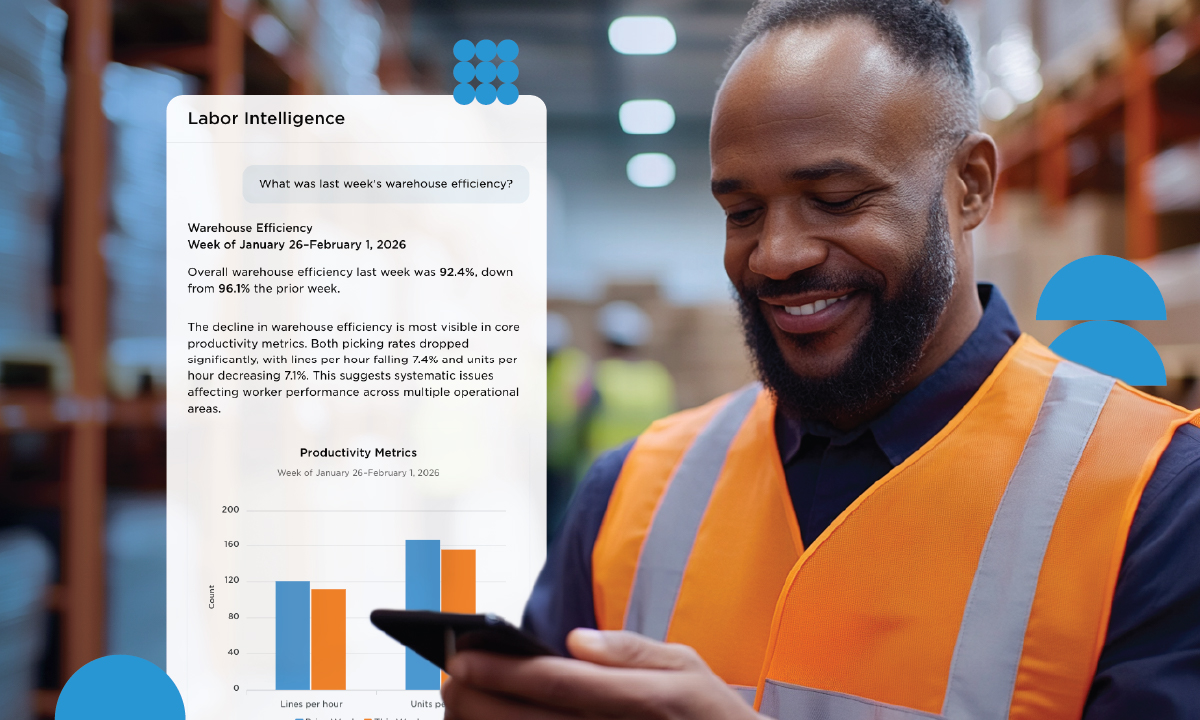
See real-time labor cost per order, individual coaching data at the five-minute level, and peer benchmarks from 60M+ real tracked hours — live in your environment.
2. EasyMetrics
EasyMetrics is a standalone LMS with strong financial analytics built around ML-derived labor standards called StandardOne. It eliminates manual time studies once historical WMS data accumulates, and its OpsFM module translates operational metrics into cost-to-serve financial data by customer and process. Integration is via API or SFTP.
Key capabilities:
- StandardOne ML derives labor standards from historical WMS data, eliminating manual time studies once baseline data is established
- OpsFM benchmarking and cost-to-serve analysis translates operational metrics into financial data
- Standalone integration connects via API/SFTP with existing WMS platforms
- Financially-focused reporting oriented toward cost per customer and process-level economics
3. Takt.io
Takt.io is a standalone LMS built for real-time in-shift supervisor coaching and floor visibility. Its Virtual Kiosk captures indirect labor and value-added services without WMS scan dependency. Takt deploys in approximately four weeks with minimal IT involvement and targets operations that prioritize live floor management.
Key capabilities:
- Real-time in-shift visibility with dynamic updates enabling supervisor intervention during live shifts
- Virtual Kiosk captures indirect labor and VAS activity without requiring WMS scanner events
- AI-assisted coaching alerts surface worker performance patterns automatically during the shift
- Multi-language UI support across 15-plus languages for diverse warehouse workforces
4. Manhattan Associates (Active Labor Management)
Manhattan Associates Active Labor Management is a mature enterprise LMS built on Engineered Labor Standards (ELS) — requiring extensive industrial engineering floor observation and manual standard development before analytics are available. It is designed for Fortune 500-scale distribution operations with multi-year implementation timelines.
Key capabilities:
- Engineered Labor Standards (ELS) foundation requiring industrial engineering time-and-motion studies
- Behavioral science gamification with mobile employee dashboards and milestone-based workforce rewards
- Cloud-native, versionless architecture with continuous updates across enterprise-scale deployments
- Holistic workforce metrics spanning wellness, performance, and engagement beyond productivity measures
5. Blue Yonder (Luminate Labor Management)
Blue Yonder Luminate Labor Management is an enterprise LMS using physics-based Engineered Labor Standards that calculate exact travel time based on distance, item weight, equipment type, and fatigue factors. It targets global supply chain operations with large IT teams and multi-year implementation capacity.
Key capabilities:
- Physics-based ELS with exact travel distance, fatigue calculations, and equipment-specific standards requiring manual setup
- Intelligent task interleaving dynamically assigns optimized task sequences to reduce deadhead travel time
- Advanced workforce scheduling with machine-learning demand forecasting aligned to projected order volume
- Vendor-agnostic robotics hub orchestrates human and robotic workflows within a unified labor management layer
6. Logiwa IO
Logiwa IO is a mid-market cloud WMS with capabilities in order batching and picking efficiency for high-velocity B2C and DTC fulfillment. Its focus is on throughput and routing optimization rather than granular labor analytics or financial visibility at the order level.
Key capabilities:
- AI-powered smart job batching dynamically groups orders to maximize picking efficiency and reduce travel time
- Mobile-first, headless cloud architecture designed for high-velocity B2C and DTC fulfillment environments
- Open API architecture enables rapid integration with ecommerce platforms and carrier networks
Why operations teams choose Deposco Labor Intelligence over Rebus
Rebus is a strong consolidation platform for genuinely complex multi-WMS environments where unifying data from disparate sources is the central challenge. For operations running Deposco Bright Warehouse that want unified labor visibility without adding a third-party consolidation layer, a new vendor, or an integration project — Labor Intelligence is the native alternative.
No consolidation overhead. Benchmarks from 60 million-plus real tracked hours, not an aggregated view of your own data. Felix diagnosing root cause before the next shift. All in the platform your warehouse already runs.
Talk to a Deposco expert about what Labor Intelligence would find in your environment — and how much it can save you.