
Ask a 3PL operations leader where their client portal actually costs them, and the answer is rarely the license fee. It’s the support tickets that pile up because clients can’t do anything themselves, the scramble to assemble reports before every quarterly review, and the renewal conversations that quietly slip away, set against an industry churn rate that can reach 40% a year in third-party logistics.
If Made4Net Synapse Anywhere is on your shortlist, it’s often because the client portal is being weighed alongside a warehouse system rather than on its own. The question worth separating out is whether your competitive edge lives in the warehouse engine or in the client-facing experience that decides whether accounts renew. The layer your clients touch every day deserves to be chosen on its own merits.
The portal category has moved quickly. Direct client self-service, AI-assisted interaction, and shared demand planning—once reserved for enterprise logistics suites—are now reachable without standing up a months-long implementation. So, the real decision isn’t whether to leave a basic portal behind. It’s whether your next portal helps you grow accounts or merely keep them informed.
3PL operations, technology, and CX leaders weighing Made4Net Synapse Anywhere alternatives tend to run into the same friction:
- Many 3PLs evaluate their portal as a WMS add-on rather than a client-experience product in its own right, when what actually wins renewals is a portal engineered first and foremost for the client relationship.
- Clients can see their numbers but can’t act on them without a phone call, whereas a modern portal gives them direct self-service inside guardrails the 3PL defines.
- Quarterly reviews still start with a manual export from the warehouse system, instead of drawing from branded dashboards that stay live and review-ready at any moment.
- The client experience stands still while shipper expectations climb, so 3PLs increasingly need collaborative planning and AI-assisted interaction that deepen the account rather than just report on it.
Below are 4 Made4Net Synapse Anywhere alternatives to weigh as you choose the right 3PL client portal:
- Deposco Bright Portal
- Logiwa 4PL Client Portal
- Octup (Octopus)
- Extensiv Hub
Ready to see how Bright Portal can improve your client experience?
1. Deposco Bright Portal — Best for 3PLs that want clients acting on their data, not just viewing it
BEST FOR: 3PLs that treat client experience as a growth lever and want a natively integrated 3PL client portal—combining live visibility, hands-on client self-service, shared demand planning, and white-label branding, all without a standalone implementation.
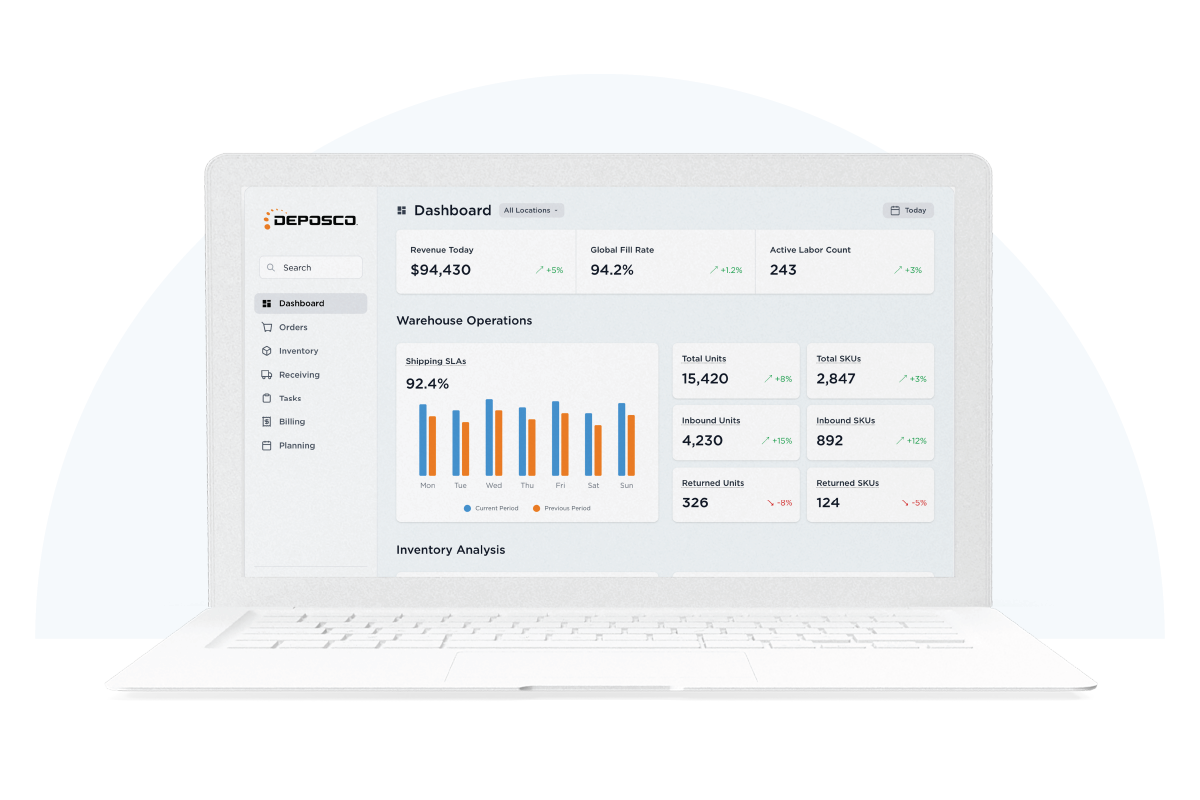
Bright Portal, released in April 2026, is part of the Deposco platform rather than a module sitting next to it. The data clients see, the warehouse work behind it, the billing, the order management, and the planning all originate from the same system. That matters most for 3PLs whose differentiation is the relationship, not just the rate card—which is exactly the buyer Bright Portal was built for.
Key feature #1: Hands-on self-service backed by an AI client assistant
Gap: The typical 3PL portal is a window, not a workspace. Clients can look up stock and order status, but anything that changes the plan—a hold, a cancellation, a reroute—funnels back to the 3PL’s team. Multiply that across a growing book of business and your operations staff spend their days as a message-routing service instead of running the warehouse.
How Bright Portal addresses it: Bright Portal treats the client as a participant, not a spectator. Within limits the 3PL sets, clients execute their own changes, and an AI assistant fields natural-language questions and kicks off actions without a support ticket in between.
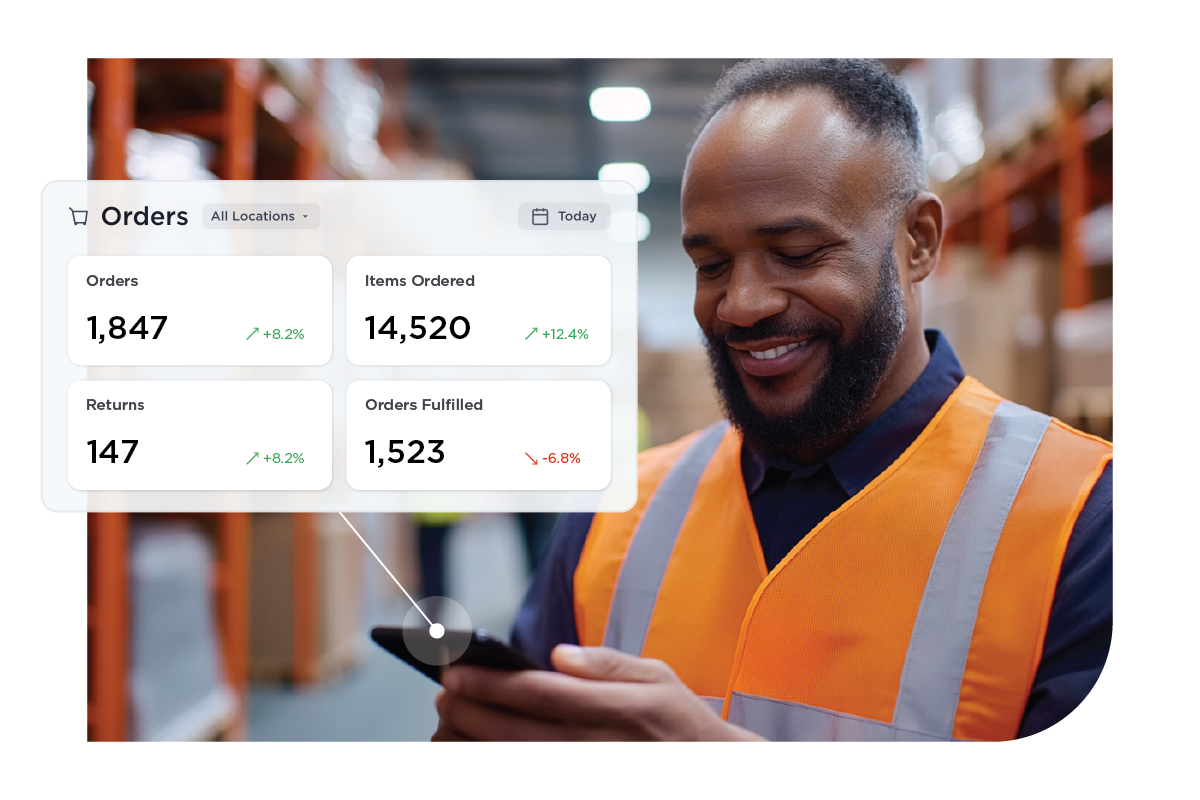
Scenario: An apparel brand running a midweek product drop realizes its inbound PO should be split across two of the 3PL’s facilities to balance coastal demand. Rather than opening a ticket and waiting, the brand splits the receipt itself in Bright Portal; the AI assistant validates dock capacity at both sites, and the change posts inside the rules the 3PL pre-set. The 3PL’s team sees it land in the dashboard and steps in only if something breaches policy.
Key feature #2: One integrated system instead of a portal stitched onto a WMS
The gap: A portal bolted onto a warehouse system demos well and ages badly. Eighteen months in, the seams show: data that lags, connectors that snap after a WMS upgrade, and client screens that quietly disagree with what the floor is actually doing.
How Bright Portal addresses it: Bright Portal shares Deposco’s underlying data model. What the client sees, what the warehouse executes, how billing calculates, and how planning runs are all the same records—not a portal syncing against a separate WMS. Nothing to reconcile, nothing to re-integrate after an update.
Scenario: Mid-contract, a 3PL needs to change the billing logic for a client moving from flat storage fees to volume-based rates. Because billing and the client’s portal view draw on the same data, the new rates show up correctly in the client’s invoices and dashboards at once—with no parallel update to a separate portal system and no week of the client’s numbers not matching the 3PL’s.
Key feature #3: Demand planning the 3PL and client build together
Gap: Most portals are rear-view mirrors. They report what already happened and leave the forward-looking work to spreadsheets and email, which keeps the quarterly review tactical and keeps the 3PL filed under “vendor” rather than “partner.”
How Bright Portal addresses it: Bright Portal carries a shared planning workspace driven by Deposco’s demand planning engine. The 3PL and client look at the same forecast, promo calendar, and target stock positions, and the 3PL can route that signal straight into capacity and labor planning. The relationship shifts from reporting results to shaping them.
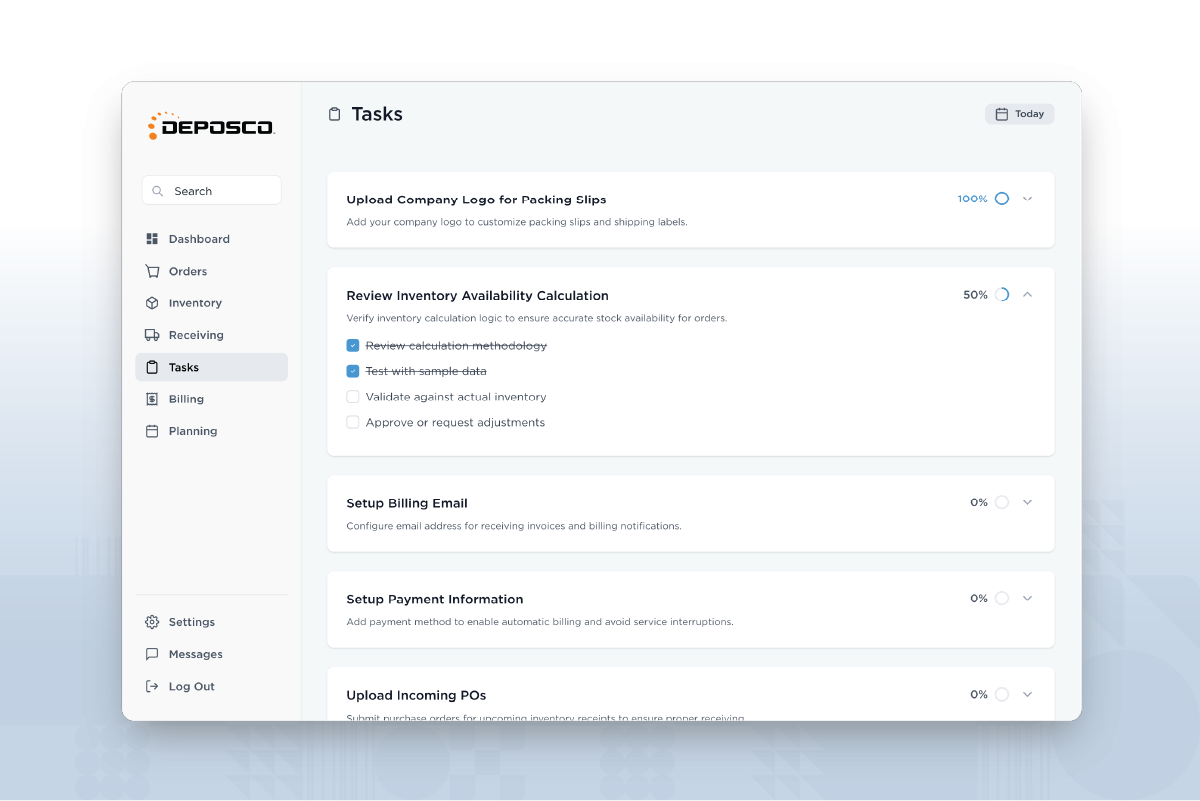
Scenario: An electronics-accessories brand is six weeks out from launching a new product line and unsure how to stage inventory across the 3PL’s network. In the shared planning view, the two teams model launch demand together, settle on opening stock by location, and lock in the labor the 3PL will need for the first fulfillment wave. The brand leaves with a plan it helped construct—and a reason to think hard before ever entertaining an RFP.
Key feature #4: Review-ready, on-brand dashboards with nothing to implement
Gap: Preparing for quarterly reviews drains account-management hours. Reports get rebuilt each cycle from systems that don’t talk to each other, then rebranded per client. Portals that claim to solve this often demand a multi-month rollout and steady IT upkeep to keep the branded views and permissions accurate.
How Bright Portal addresses it: Bright Portal’s dashboards stay live and on-brand without anyone exporting anything. Service levels, shipping performance, and inventory accuracy render in the client’s own framing. The portal wears the 3PL’s logo, palette, and domain, and the 3PL’s own team manages permissions, views, and onboarding without engineering help. Existing Deposco customers switch it on with no separate implementation.
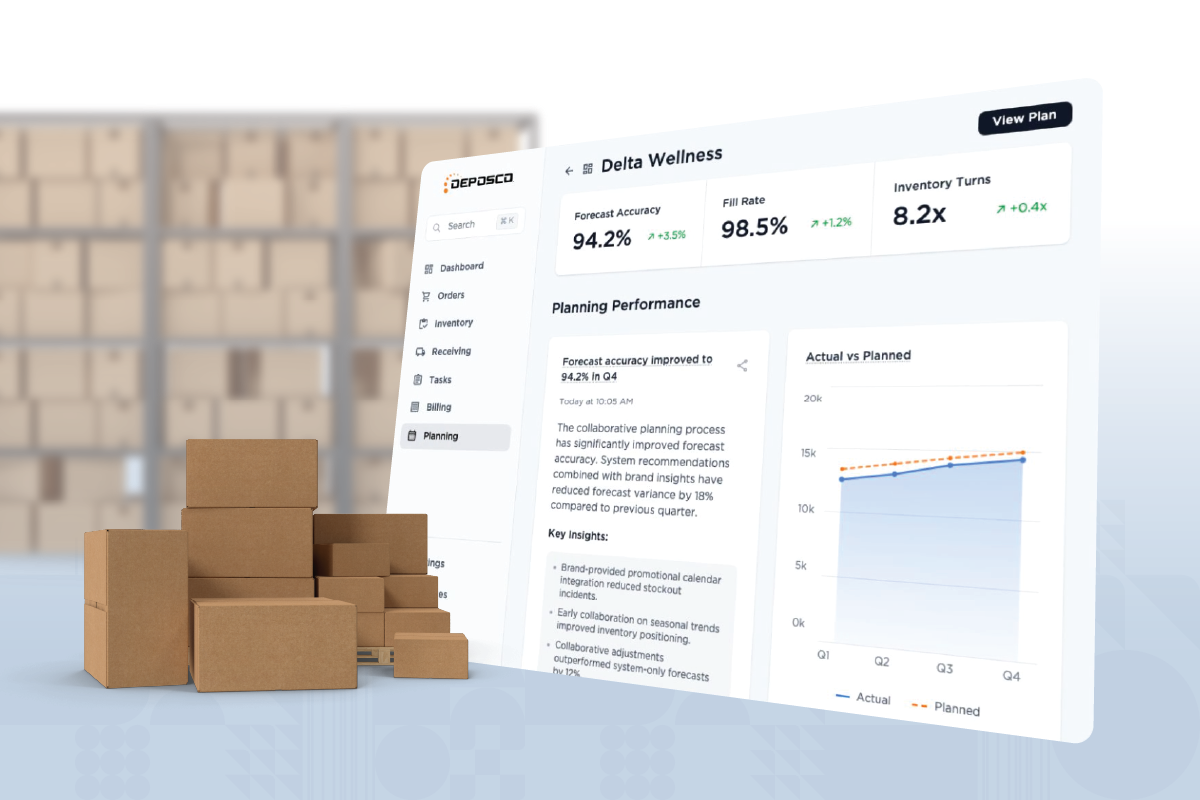
Scenario:
A 3PL’s CX director runs portfolio reviews across her book of accounts the same week. Instead of commissioning a deck per client, she opens each client’s own branded portal—their service levels, their cost-to-serve, their inventory trend—and walks each conversation from “here’s last quarter” into “here’s the move for next quarter,” with zero prep time sunk into report-building.
The only 3PL client portal natively built into your WMS — actionable, white-labeled, and ready now without an implementation project.
2. Logiwa 4PL Client Portal
Logiwa’s 4PL portal gives a 3PL’s clients a window into orders, inventory, and billing, and pairs that with no-code tools for configuring fulfillment workflows and automating recurring charges.
Features & capabilities
- Per-client views of order activity, stock, and billing detail
- Drag-and-drop configuration of fulfillment workflows
- Recurring billing automation with charge management
- Reporting across day-to-day operational data
What to watch
Logiwa’s portal has historically been stronger on showing data than on letting clients act on it. Visibility is solid; self-service execution has been the narrower piece. If client self-service is central to your pitch, confirm exactly what clients can execute today and where Logiwa is investing next.
3. Octup
Octup is an overlay that reads from a 3PL’s existing WMS and ERP and presents that data to clients through configurable dashboards, with natural-language search for digging into operational detail.
Features & capabilities
- Configurable, branded dashboards for client-facing order and performance data
- AI-assisted natural-language search across operational data
- Automated charge capture with itemized billing roll-up
- Overlay deployment layered above existing core systems
What to watch
Because Octup sits on top of the stack rather than inside it, clients view their data through the overlay but still drop back into the underlying WMS to act on it. The upside is a lighter install; the cost is a workflow seam that tends to widen as account volume grows.
4. Extensiv Hub
Extensiv Hub provides client portal access and operational oversight for 3PLs running several warehouse locations, tying order data to billing and invoicing.
Features & capabilities
- Cross-site inventory and order visibility for client accounts
- Billing automation driven by warehouse activity across locations
- Centralized dashboard for network-wide operational monitoring
- Tooling for invoice generation and charge reconciliation
What to watch
Extensiv Hub covers the multi-site billing and visibility use case well. Before committing, pressure-test the current client-facing portal feature set against the specific expectations your accounts bring—particularly around self-service and planning—by requesting a live demonstration with your own workflow scenarios.
Why Deposco Bright Portal Stands Out Among Made4Net Synapse Anywhere Alternatives
These platforms aren’t interchangeable. Logiwa centers on visibility plus workflow configuration. Octup keeps the install light with an overlay. Extensiv Hub anchors on multi-site billing automation. Each is a reasonable answer to a specific question.
For 3PLs whose growth depends on the client relationship—the ones who looked at Made4Net mainly for the WMS and realized the portal is what their clients will actually live in—Bright Portal lines up four things in a single platform:
- Hands-on self-service with an AI assistant, so clients run their own changes inside 3PL-defined limits instead of queuing behind your team
- One integrated system where the client view, warehouse execution, billing, and planning are the same records—not a portal syncing against a separate WMS
- Shared demand planning that turns quarterly reviews into forward-looking strategy sessions and raises the cost of leaving
- On-brand dashboards with no implementation for existing Deposco customers, configured by the 3PL’s own team without IT
If you’re choosing a WMS and a client portal in the same breath but you know the portal is where retention is won, Bright Portal is built for that decision.
See how Bright Portal combines native integration, self-service action, and AI-assisted planning in one platform.
Vendor capabilities described in this article reflect publicly available information and vendor documentation as of May 2026. Capabilities, features, and product scope vary by tier, deployment model, and customer size. Confirm current details directly with each vendor. This article is for informational purposes and does not constitute a vendor endorsement.