
For 3PL owners and operators, the “volume trap” has never been more dangerous.
In the old logistics model, 3PL profitability was a simple math problem: more pallets plus more picks equals more margin. Let’s be honest, it always equaled more revenue. The hope was that margin rose on the assumption of scaled efficiency gains. But as we move through 2026, that equation is breaking quickly.
Avoiding the volume trap
Macroeconomic shifts have forced brands to scrutinize every line item, while simultaneously demanding “white-glove” 3PL services that legacy fulfillment systems simply weren’t built to handle. Today, if you can’t support complex kitting, rapid multi-channel pivots, and total data transparency through a premium 3PL customer portal, you aren’t just losing a client; you’re losing your competitive edge.
The path to sustainable growth is no longer found in transactional volume. It is found in orchestration: the ability to turn operational complexity into a high-margin service layer.
Speed to value: new onboarding in hours
In a volatile market, brands don’t have 90 days to wait for a custom-coded WMS implementation. They need to be live “yesterday” to capture seasonal trends or capitalize on new marketplace opportunities.
Legacy fulfillment systems often act as bottlenecks, requiring expensive external consultants for even minor configuration changes. Modern orchestration, however, leverages modular, no-code integrations, enabling 3PLs to say “yes” to complex requirements without incurring technical debt.
Proof in Practice: Consider Derby Supply Chain Solutions, which leveraged Deposco to compress its ecommerce client onboarding from several weeks to less than two hours. This agility didn’t just win them business; it enabled them to achieve 77% faster order processing across their entire network and an 86% reduction in billing time.
By moving away from “tribal knowledge” and toward automated, scan-based workflows, 3PLs can connect a new client’s entire Shopify ecosystem (items, orders, and images) with speed and ease never before thinkable.
Monetizing the “hard stuff”: turning VAS into a profit center
Value-Added Services (VAS)—personalized inserts, subscription kitting, and specialized apparel decoration—are often viewed by operators as “margin killers” because they are difficult to track and even harder to bill accurately.
In 2026, these 3PL services are where the real money is. As storage rates stabilize, the 3PLs leading the pack are those that treat VAS as a premium product. Success requires a platform that doesn’t just “allow” kitting but orchestrates it as a native part of the 3PL pick-and-pack flow.
When VAS is integrated, every touchpoint is captured, ensuring 100% billing accuracy and protecting your labor margins. This shift allows you to move away from stagnant storage billing and toward a profitable 3PL model based on throughput and operational efficiency.
Proof in practice
Abacus Logistics Solutions transformed their operations by moving away from manual bottlenecks to an orchestration-first model. By leveraging Deposco’s pre-built integrations, they achieved 99.95% inventory accuracy and reduced their fulfillment staffing needs by 67%. Most importantly, they can now connect a new client’s marketplace in under 10 minutes, turning rapid onboarding and complex technical setup into a signature service that drives their growth ambitions.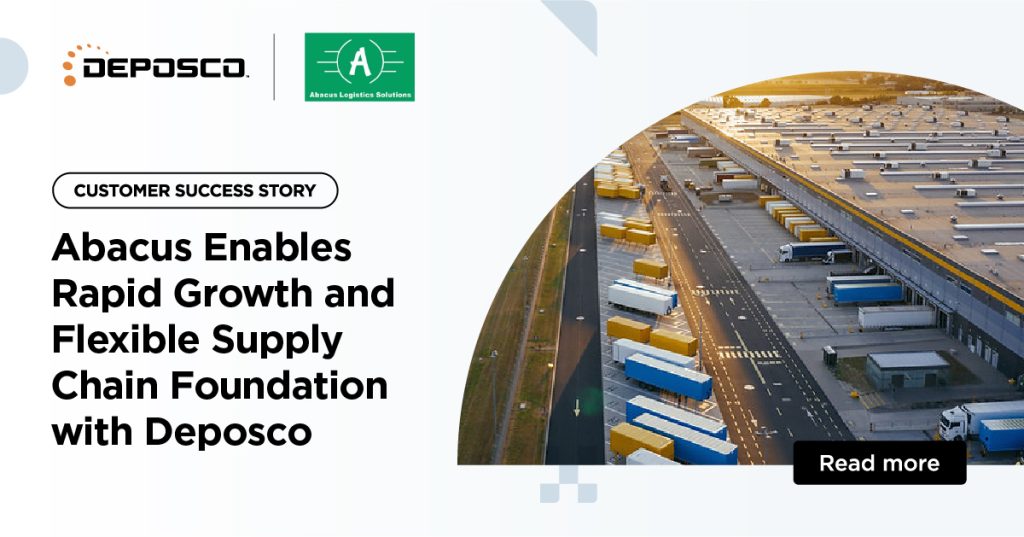
In the same way that software moved to “As A Service”, 3PLs that want to maximize their ROI need to consider what their physical “As A Service” will be. Differentiation will be what sets a 3PL apart, taking a brand management and growth perspective rather than the old service-provider model.
CSV exports don’t count as “visibility”
Brands no longer accept periodic spreadsheet exports or reactive callbacks as “visibility.” They demand transparency that ends the “black box” of inventory, whether it’s sitting in your warehouse, moving through a retail channel, or being processed as a return.
Data transparency has evolved from a back-office requirement into a customer-facing product.
Start being the strategic logistics partner your clients expect. Discover the premium portal that gives clients real-time visibility into their operations — and gives your team the tools to back it up.
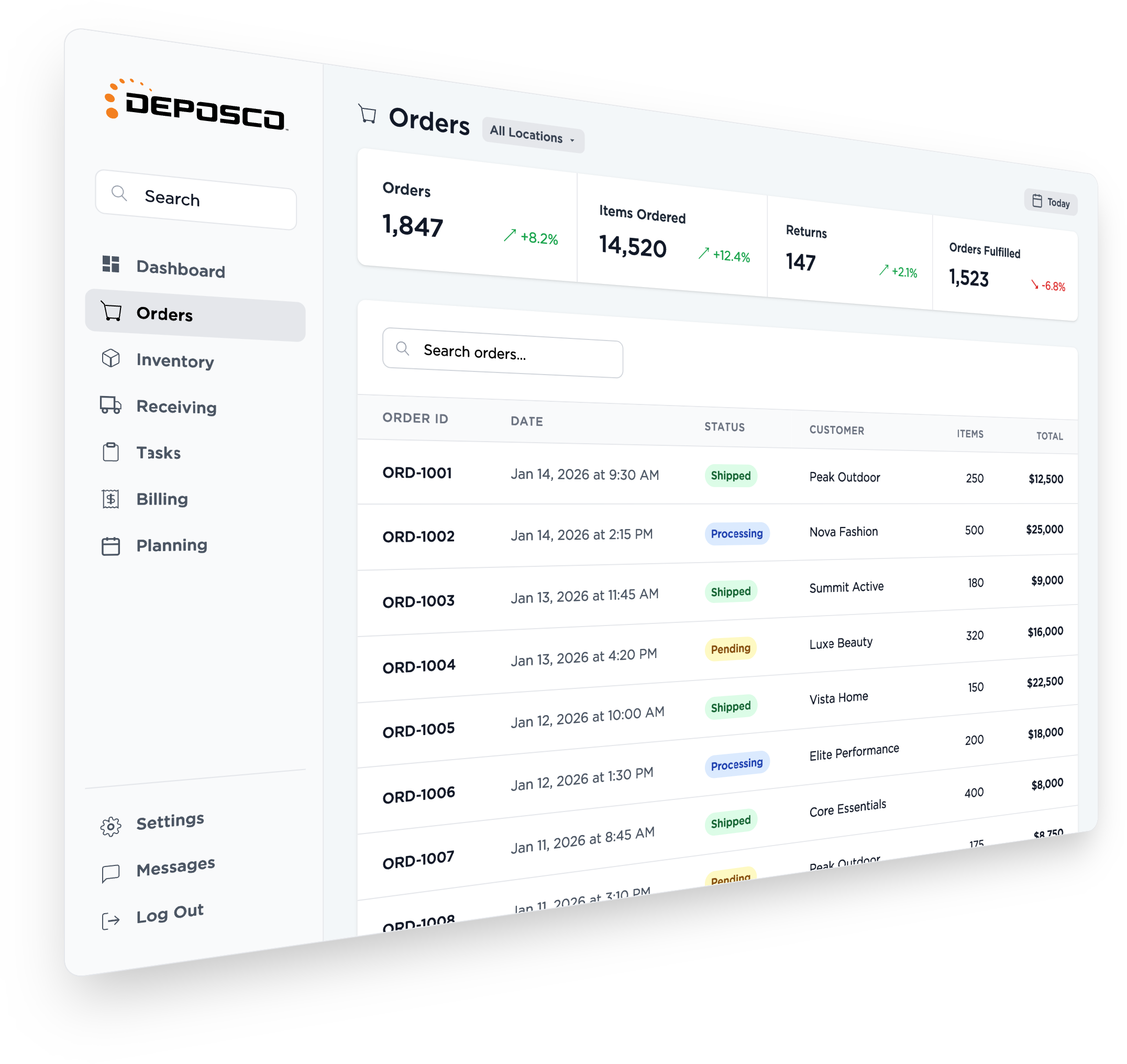
3PLs that provide a real-time, self-service portal aren’t just giving away info; they are building a “stickiness” that makes them irreplaceable. This visibility reduces customer service “where is my order” (WISMO) calls and allows your team to focus on strategy rather than spreadsheets.
Proof in practice
Nimbl Fulfillment used this transparency to eliminate the “spreadsheet nightmare” of multi-system billing, reducing their billing cycle by 57%. Simultaneously, they increased order volume by 64% in just three months because their clients finally had the real-time data needed to scale confidently.
AI keeps all the facts straight
With data driving the entire supply chain AI transformation, beyond creating clean transactional and observational data, the open and secure sharing of that information between supply chain partners will be a critical unlock. Those who embrace it will attract and retain growth-minded customers. The alternative is relegation.
Millions of data signals across labor, inventory, shipping, and executive intelligence converge in Deposco to enable transformational decision-making for your business.
Profitable 3PLs don’t just store inventory—they orchestrate it
3PL profitability= in 2026 requires recognizing a fundamental truth: You are no longer in the warehouse business; you are in the technology and agility business.
By investing in a 3PL fulfillment and orchestration platform that simplifies onboarding, monetizes complexity, and provides radical transparency, you’re moving your 3PL from a commodity provider to a strategic partner. You stop competing on price and start winning on performance.