If your accounts receivable aging report looks more like a loan portfolio than an invoice tracker, you’re financing your clients. You probably didn’t decide to. It happened the moment they stopped trusting your data.
Here’s the conversation happening in 3PL finance departments right now:
“Why is DSO at 67 days?” — “Client dispute. They’re questioning the storage charges.” — “Again?” — “Third time this quarter.”
The instinct is to blame the client. Slow payers. Difficult procurement. Brands that use disputes as a cash flow strategy. Sometimes that’s true. More often, the real problem is somewhere else entirely.
The dispute cycle is a visibility problem
A 3PL invoice lands in a client’s inbox with no context. They look at the number. It doesn’t match what they expected. They can’t easily verify it. So they do what any reasonable business does — push back, ask questions, request backup, put the payment on hold while someone figures it out.
Meanwhile, you’re pulling reports, forwarding spreadsheets, scheduling calls, building a case for charges that were legitimate three weeks ago.
That’s not a collections problem. It’s a communication problem. And it costs you well beyond cash flow. Every dispute erodes trust. Every delay stretches your cash conversion cycle. Every hour your team spends defending an invoice is an hour off operations, growth, and the clients who aren’t disputing anything.
You’re financing the gap between what you know and what your clients can see.
The 30-60-90 day math nobody wants to do
Say you’re billing $500K a month. Average DSO is 65 days. At any given moment, that’s roughly $1.1 million in receivables sitting in “pending,” “in dispute,” or “waiting on approval.”
That’s $1.1 million you’ve already earned. Work you’ve done. SLAs you’ve hit. Inventory you’ve managed. And you’re waiting on it because your clients don’t have enough visibility to feel confident paying the bill.
Now picture that capital in your account instead of theirs. Hiring. Equipment. Technology. Growth. The math gets uncomfortable fast.
Why visibility fixes what collections can’t
When DSO climbs, the instinct is to tighten terms, escalate follow-ups, bring in collections. Those are downstream fixes for an upstream problem.
The upstream problem is that your clients don’t have a live window into what you’re doing for them. They see your operation once a quarter, in a spreadsheet, during a QBR where someone manually pulled the numbers and hoped nothing looked off.
That gap is where disputes are born. It’s where skepticism compounds — quietly, until it shows up as a late payment, a re-negotiation, or a call from a competitor who pitched something shinier.
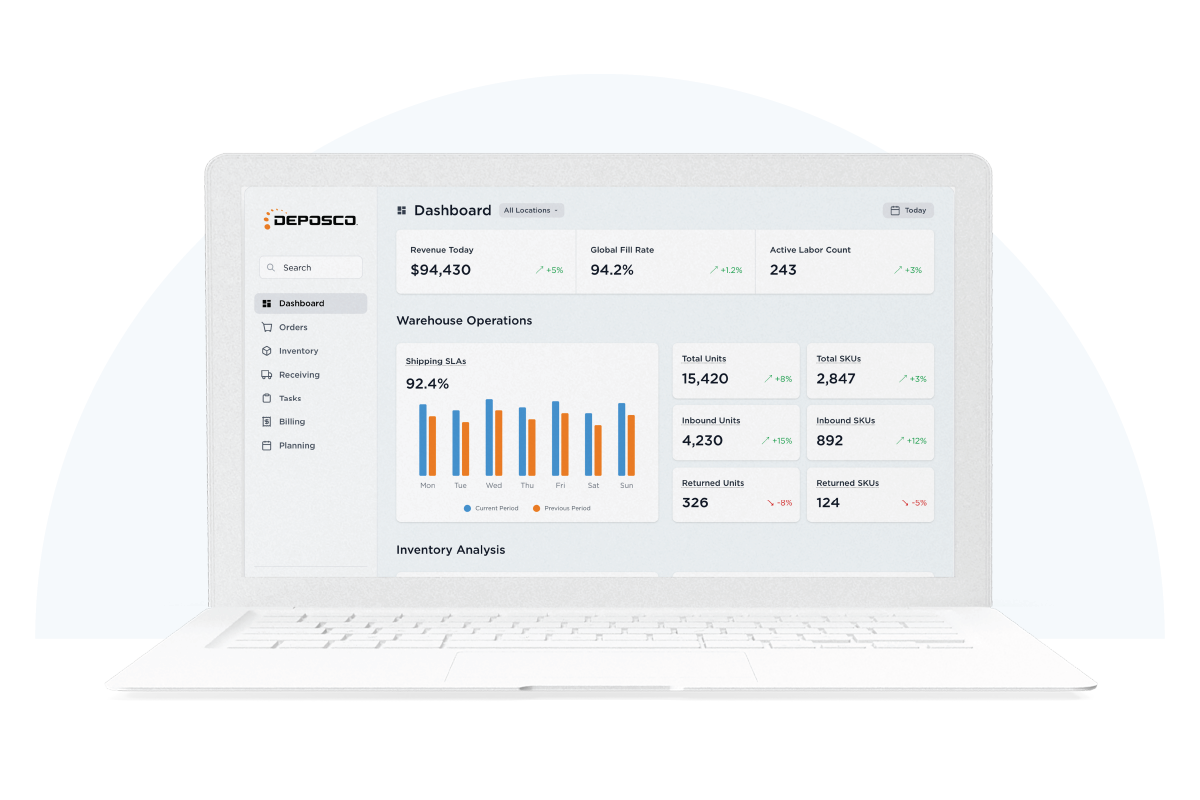
Give clients real-time access to their own data — SLA attainment, inventory accuracy, shipping performance, charges tied directly to activity — and the invoice stops being a surprise. It becomes a confirmation. The numbers in the portal match the numbers on the bill. Nothing to dispute. Nothing to question. No reason to wait.
Visibility doesn’t just accelerate payment. It eliminates the conditions that make disputes possible.
The relationship cost nobody measures
Here’s what doesn’t show up on your AR aging report: what the dispute cycle does to the relationship.
Every time a client pushes back on an invoice, someone on your team has to defend your work. That posture — defensive, reactive, a little adversarial — bleeds into every other interaction. It’s hard to have a growth conversation when your last five touchpoints were about invoice disputes.
And remember who’s on the other side of that dispute. The brand’s AP team isn’t trying to stiff you. They’re holding payment because they can’t reconcile your number against anything they can see. Give them a portal that shows the activity behind the charge and you’ve taken the dispute off both your desks.
The 3PLs building the strongest relationships right now aren’t the ones with the most aggressive account management. They’re the ones who’ve made their value undeniable — where clients see, in real time, exactly what they’re getting, and the conversation turns toward what’s next instead of what’s wrong.
That shift doesn’t happen by accident. It happens when you invest in the infrastructure that makes your performance visible.
Get out of the banking business
You built a 3PL to move inventory, serve brands, and grow. Not to float working capital for clients who can’t verify your charges.
This is solvable. Not with better collections. Not with tighter contract language. With visibility.
When clients can log into a branded portal and see real-time performance — SLA attainment, shipment activity, inventory accuracy, charges tied to actual events — the dynamic changes. Invoices get paid. Disputes dry up. The conversation moves from “can you prove this charge” to “what are we doing together next quarter.”
That’s the 3PL business worth running.
You’re financing the gap between what you know and what your clients can see. Bright Portal closes that gap.
Join us for The Proactive 3PL: Turning Warehouse Data into a Growth Engine for Your Brands on Thursday, June 18 at 11am ET.