Ten seconds doesn’t sound like much. But run the math.
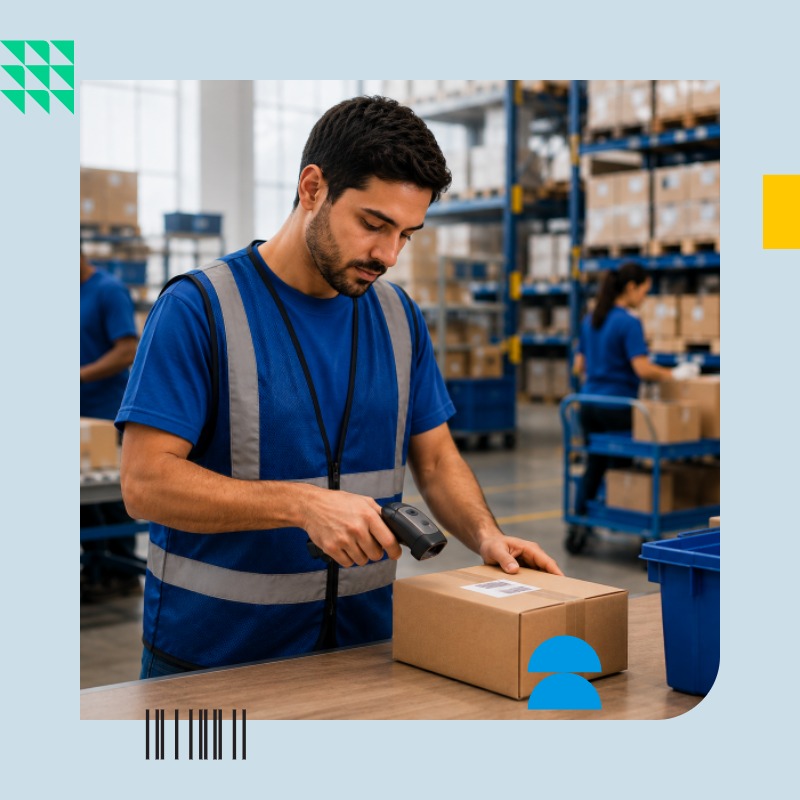
Ten seconds saved per scan. One worker does 400 scans in a shift. That’s 4,000 seconds, just over an hour of recovered labor per worker per day. Multiply that across 20 workers, five days a week, 50 weeks a year. You’re looking at more than 5,000 hours of recovered capacity annually. At $18 an hour, that’s $90,000. From 10 seconds.
Labor management is a game of inches. Small, consistent improvements add up to real money. The problem is that most operations don’t have the visibility to find the inches, and when they do find one, they move on without asking what other inches they’re still leaving on the floor.
Where the inches are
The inches aren’t usually in obvious places. They’re in the transitions.
Post-break reactivation is one of the most consistent sources of lost time across warehouse operations. Workers clock back in from a 15-minute break and take 8-12 minutes to reach full productivity. A five-minute pre-shift reminder to be ready at the handheld before the break ends doesn’t feel like much. Over a year, across a team, it is.
Pack wait time is another one. When picked orders stack up waiting for a packing station, it shows up as idle time on the packer. But the root cause is upstream in the pick flow. If your pick rate is outrunning your pack capacity, coaching packers to go faster won’t fix it. Adjusting the staffing ratio will.
Order type mismatch is the one that surprises most operators. If your multiline, multi-quantity orders are being processed with the same pick method as your simple single-line orders, you’re almost certainly leaving throughput on the table. You won’t know that without order-type-level visibility.
How AI finds the inches faster
Historically, finding these problems meant an industrial engineer on the floor or an analyst pulling data and building a report. That took time, and by the time the finding surfaced, the operation had moved on.
Felix shortens that gap. When post-break idle time spikes on a particular shift, Felix flags it. When pack wait time rises above the operation’s historical average, Felix connects it to the throughput gap downstream and shows you which order types are most affected. When a worker’s efficiency on complex orders drops relative to their own baseline, Felix surfaces it before it becomes a pattern.
Humans still find the inches. Felix just makes sure the right person knows about the problem in hours instead of days. Sometimes minutes. At the pace most operations run, that’s the difference between catching a problem and chasing one.
The coaching conversation that actually works
Without data, coaching is subjective. “You seem slow today.” These conversations are uncomfortable for everyone and rarely produce the behavior change you’re looking for.
With data, the conversation is specific. “Your efficiency on multiline orders is at 58% this week, below your own average from last month and below the team average. Let’s look at where the time is going.” That’s a conversation that leads somewhere.
Felix supports this directly. When a manager asks which workers need attention today, Felix returns a specific, ranked answer with the data behind it. The manager doesn’t have to build the case. They just have to have the conversation.
The compounding effect
Operations that manage labor well aren’t doing one big thing right. They’re doing a hundred small things right, shift after shift. The hard part isn’t finding the first inch. It’s having a system that keeps finding the next one after you’ve already captured the last.
That’s what Felix does.
Ten seconds at a time.